Honey Marlone: A Premium Script Font for Modern Marketing Campaigns
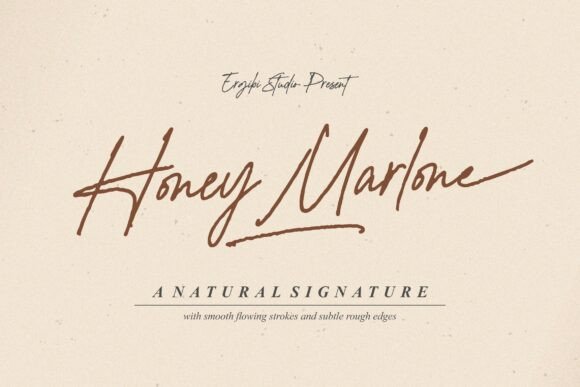
It was Tuesday morning, and I was staring at a final mobile preview of a product teaser graphic. The headline text felt cold and corporate, failing to capture the personal story behind the new launch. That’s when I swapped it out for Honey Marlone, a natural handwritten font that radiates warmth and a personal touch, with smooth flowing strokes and subtle rough edges. Suddenly, the message felt authentic—each letter seemed as if it were written with an ink pen on cozy paper, transforming a standard announcement into an invitation.
How Honey Marlone Enhances Message Clarity in Social Media Graphics
Honey Marlone is a script handwritten font, but its design is strategically balanced for digital readability. In campaign workflows, clarity is paramount. When you overlay text on a busy Instagram post or a fast-moving Reels cover, the font’s distinct character shapes and consistent flow ensure your headline is understood instantly. I tested it on a series of quote graphics for a content series, where the goal was to make the words feel personal and impactful. Honey Marlone delivered exactly that—the smooth strokes guided the eye, while the subtle rough edges added just enough texture to prevent the text from blending into the background. This font performs exceptionally well as a display font for short, powerful statements: sale announcements, product teasers, or campaign slogans.
For mobile screens and small previews, like YouTube thumbnails or Pinterest pins, Honey Marlone maintains its integrity. I recommend using it at a sufficient size and ensuring there’s strong contrast with the background—dark text on a light field or a light, bold version on a darker image. Its organic feel can boost audience engagement by making promotional visuals feel less like ads and more like handwritten notes from a friend, which is a powerful tool for brand recognition in crowded digital feeds.
Honey Marlone for Branded Templates and Campaign Consistency
Building a cohesive visual language across a campaign—from email banners to digital ad layouts—is a core challenge for marketers. Honey Marlone can serve as a fantastic anchor for a brand’s typography system when used for primary headlines. Its warmth and personal touch make it ideal for campaigns that hinge on human connection, like an online course launch, a webinar banner, or an online shop promotion focusing on craftsmanship. By employing Honey Marlone consistently across these touchpoints, you create a recognizable and inviting thread that ties the entire campaign together.
Practical font pairing is crucial here. Honey Marlone, being a distinctive script font, works best supported by a clean, neutral sans serif font for body copy and supporting information. This pairing creates a clear visual hierarchy: the handwritten font captures attention and emotion for the main message, while the sans serif ensures all detailed information—prices, dates, descriptions—remains perfectly readable. This combination is effective for landing page headers, promo graphics, and branded template packs that need to balance personality with professionalism.
Integrating Honey Marlone into Digital Ads and Web Design
The application of Honey Marlone extends into more formal digital spaces with careful consideration. In website banners or landing page headers, this font can instantly soften a corporate interface and inject a dose of approachability. For a recent seasonal sale campaign, using Honey Marlone for the main hero text (“The Summer Collection Is Here”) on the site’s banner immediately set a welcoming tone, differentiating the brand from competitors using stark, geometric typefaces. The font’s natural aesthetic suggests authenticity, which can be a significant advantage in sectors like lifestyle, education, creative services, and direct-to-consumer products.
However, it’s important to review Honey Marlone’s included styles and file formats before full integration. Check for the availability of alternates or ligatures that can add extra flair to logo-style text or decorative titles. Also, verify its multilingual support and commercial font licensing if you plan to use it in client campaigns, merchandise, or digital products. As a premium font, its license should cover the broad usage typical in marketing—from social media graphics to printed promotional materials.
When Honey Marlone Might Not Be the Optimal Font Choice
Every font has its niche, and Honey Marlone is a specialist. It excels in communication that requires warmth and a personal touch. Conversely, there are campaign situations where this script handwritten font may not be suitable. It is not designed for long copy or dense informational text. Using it for paragraphs of body copy on a landing page or lengthy terms and conditions in an email would severely hinder readability. Similarly, for formal corporate communications requiring absolute neutrality and precision, or for any text that must remain legible at very tiny sizes (like footer disclaimers), a more standard serif or sans serif font would be a better choice.
The key is strategic placement. Use Honey Marlone where you want to make a human, emotional connection—at the point of first impression. Let it handle the headline, the callout, the campaign label. Then, let a more utilitarian font handle the rest. This approach ensures your message is clear, your brand personality shines, and your audience receives the information effortlessly.
Ultimately, Honey Marlone is more than just a fonts file; it’s a design asset that can redefine the tone of a campaign. Its ability to convey a handwritten, intimate feel on digital platforms makes it a compelling tool for marketers and creators looking to break through the noise with authenticity. By understanding its strengths—and its limitations—you can deploy this natural handwritten font to build more engaging, consistent, and memorable brand experiences across every channel.